
Home | Research & Resources | Yemen
Key Findings
The prevalence of FGM/C among women and girls in Yemen is 19%. Prevalence varies greatly depending on region and is estimated to reach 85% in certain areas.
Amongst women who have experienced FGM/C, 62% are supportive of its continuation. On the other hand, 3% of women who have not experienced FGM/C support continuing the practice.
Geography
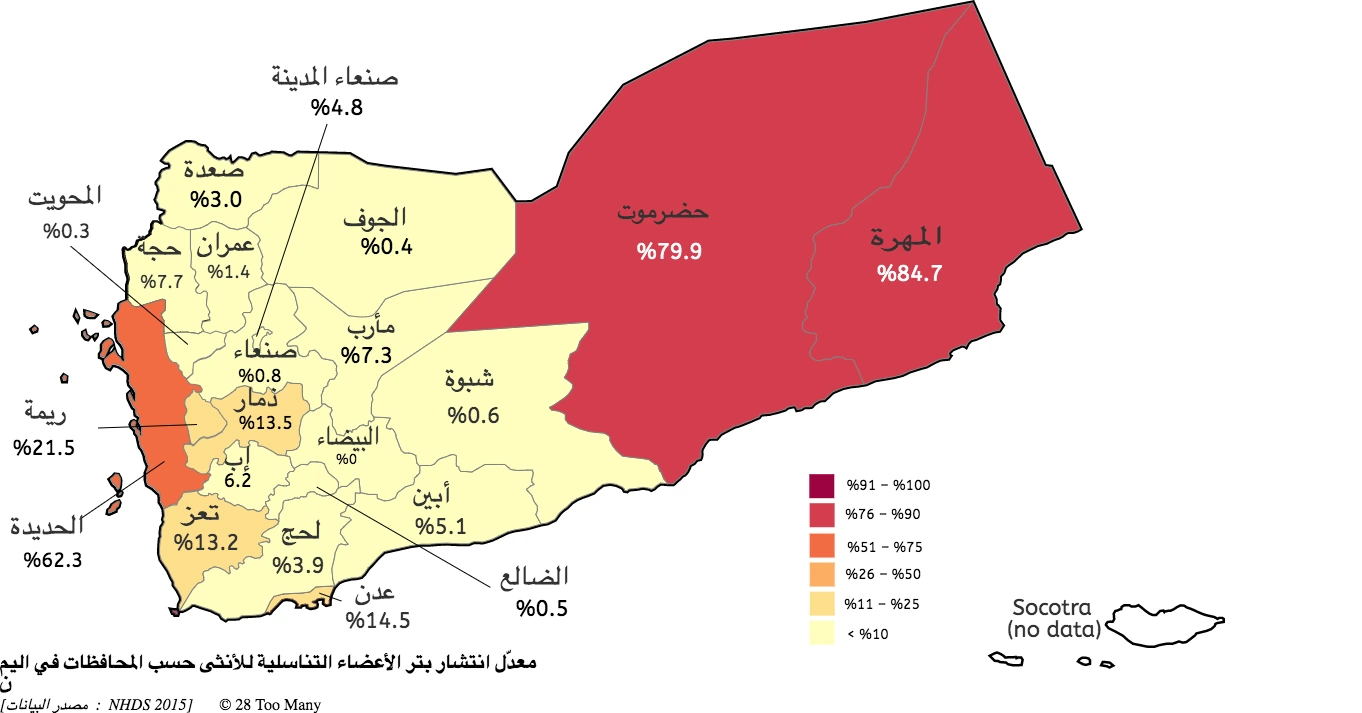
The regions with the highest prevalence are the Hadramout governorate, located in the eastern part of Yemen along the southern Arabian Sea coast, and the Al-Mahrah governorate situated in the southeastern region of the country.
Age
85% of girls who have undergone FGM/C were cut within the first week of birth
Type
’Cut, flesh removed’ is the most common type of FGM/C practised. 90% of women report experiencing this type of cut.
Agent
Amongst women aged between 15-49 years, 93% were cut by traditional agents and practitioners. However, there is a rise in trained medical personnel carrying out FGM/C with 13% of youngest daughter who had undergone FGM/C stating that health professionals were their practitioners.
Distribution of FGM/C across Yemen
Two of Yemen’s governorates (Al-Mhrah and Hadramout) have an FGM/C prevalence of 80% or higher, and both are in the far east of the country. Prevalence at the governorate level ranges from less than 1% (Al-Baidha, Al-Jawf, Sana’a, Al-Mhweit and Aldhalae) to 84.7% (Al-Mhrah). It should be noted that some of the data at governorate level is based on a small number of women and should be interpreted with caution.
There is little difference between the prevalence in urban (17.1%) and rural (19.2%) areas. Women with no formal education or only a basic education are more likely to have been cut than women with a secondary or higher level of education.
Women in the lowest wealth quintile are more likely to have been cut (26.5%) than those in the highest wealth quintile (14%). However, across the five wealth quintiles there is not a straightforward trend.
Trends in FGM/C Prevalence in Yemen
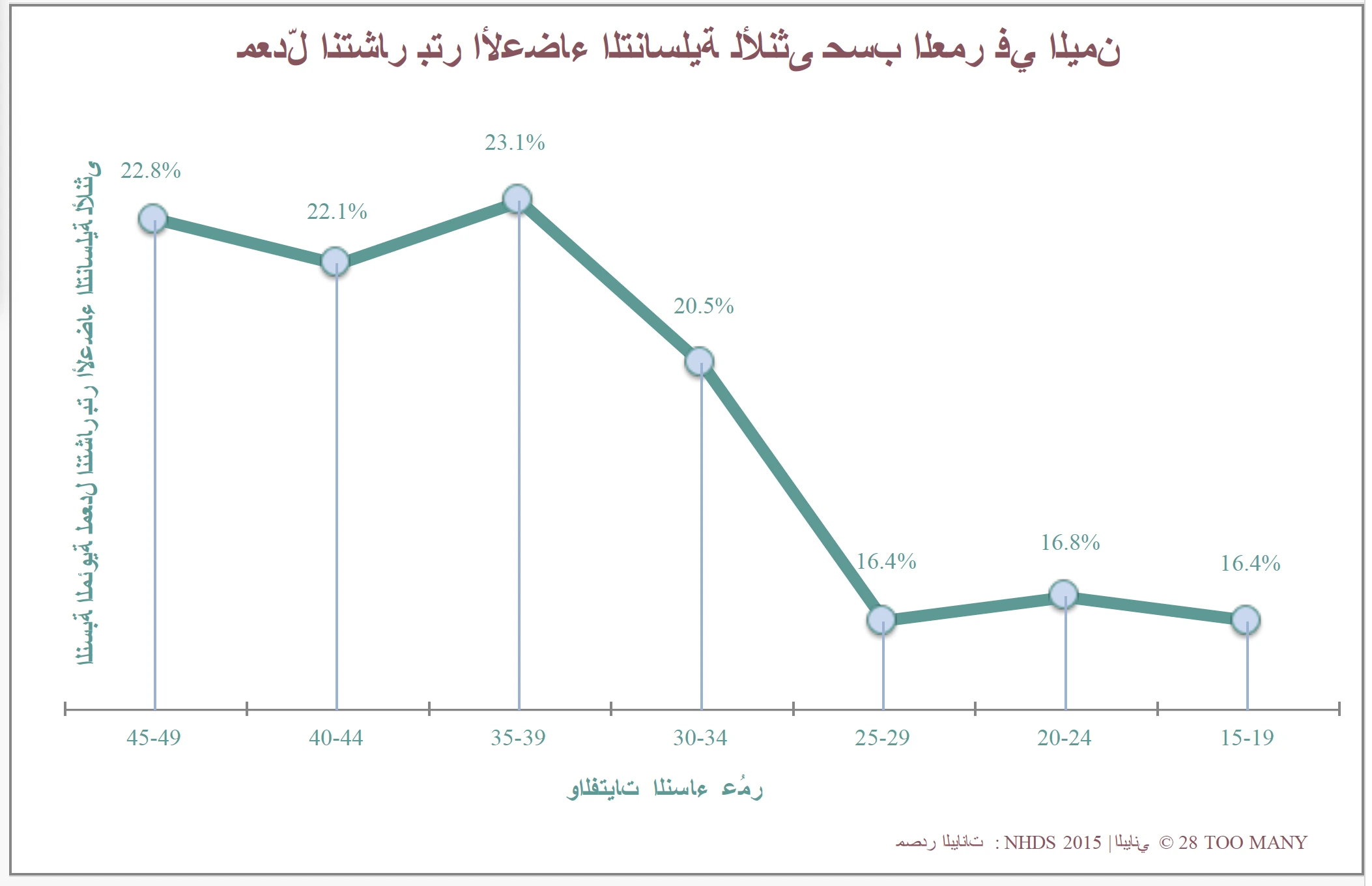
Measurements of FGM/C prevalence prior to 2013 were restricted to women who had been married at any time, meaning that a direct comparison cannot be made. However, breaking down the most recent data by age group shows that the prevalence among women aged 45–49 is 22.8%, while among the youngest age group this has fallen to 16.4%. Despite the fact that a small proportion of women may be cut after the age of 15, the data suggests a trend towards less frequent cutting among younger women.
FGM/C Legislation in Yemen
Although there is no specific legislation criminalising FGM/C, Yemen’s Penal Code (Law No 12, 1994) provides for prosecution under Articles 241-244 which refer to various offences of “injury to the body” that includes “amputation or detachment of a limb ….. or paralysis of the function of any senses” either partially or permanently.
Development Indicators
Population Growth
34,077,555 (as of 2025), with a 2.5% growth rate (2025)
Infant mortality
44.6 deaths per 1,000 live births (2024)
Maternal mortality
118 deaths per 100,000 live births (2023)
SDG Gender Index
142 out of 144 countries (2022)